
Short answer: A nitrogen regulator for an air conditioning pressure test should be selected from the equipment procedure backwards: define the permitted pressure, cylinder connection, service port and hose requirement first. Equipmentyqd lists a nitrogen regulator assembly locked to the YQD-A configuration and describes it for service and maintenance listings. The manufacturer does not specify the inlet or outlet fittings, pressure range, hose length, gauge scale, relief setting or certification. That means the page identifies a possible component, not a universal air-conditioning test kit. Confirm every missing field against the system documentation and workplace controls before ordering or connecting pressurised equipment.
Start with the air-conditioning procedure
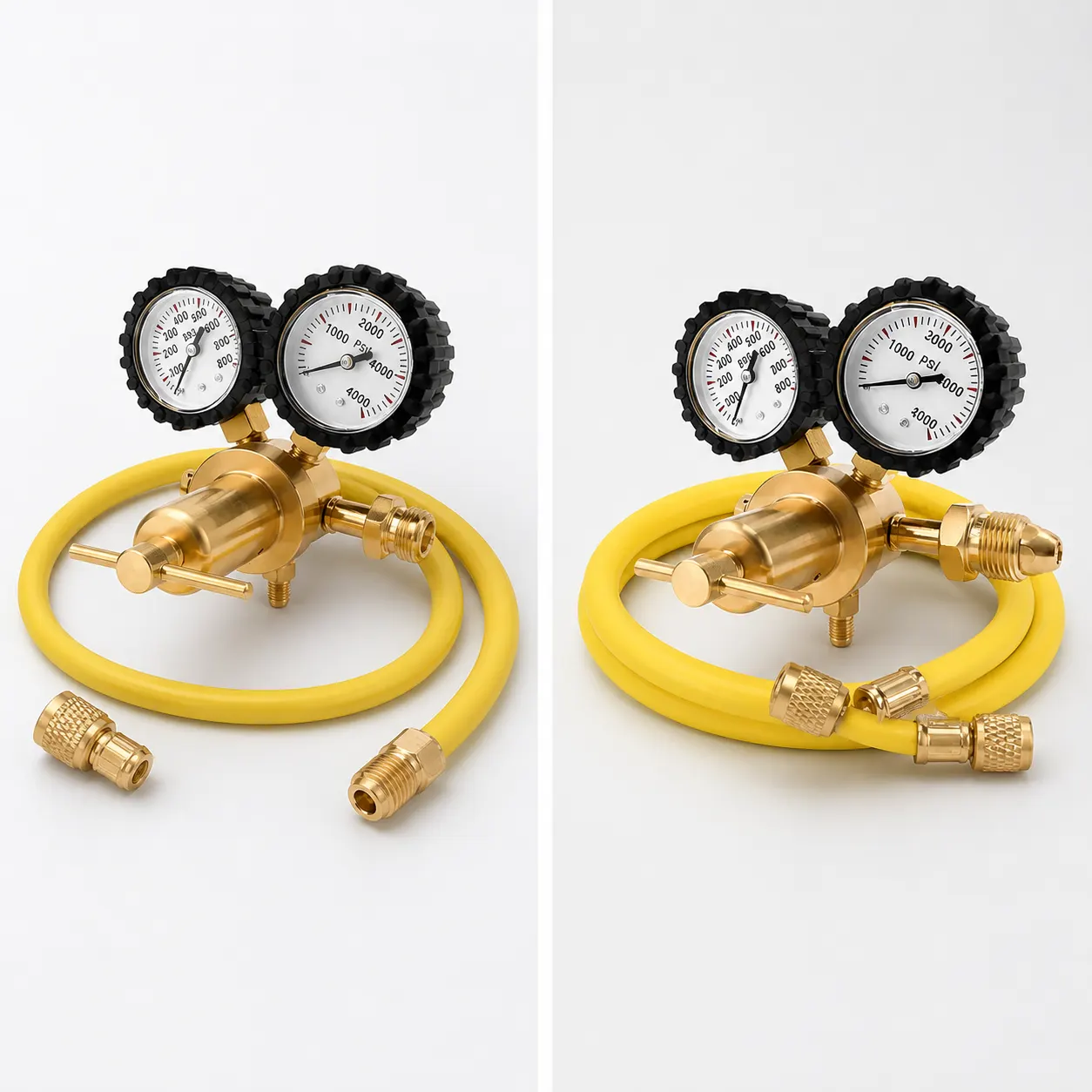
The current listing identifies a nitrogen regulator assembly and says it is locked to the YQD-A configuration. It describes the item as suitable for a focused pressure equipment product page, which is useful context but not a technical approval for a particular air-conditioning system.
Write down the equipment manufacturer’s pressure-test method before comparing regulators. The product page does not state the applicable system types, inlet or outlet fitting, pressure range, gauge scale or relief setting, so the listing cannot answer those questions by itself.
| Air-conditioning check | Current listing | Confirm from the procedure or seller |
|---|---|---|
| Assembly identity | YQD-A nitrogen regulator assembly | Exact variant and replacement compatibility |
| System interface | Not specified | Cylinder, service-port and equipment-side fittings |
| Pressure control | Not specified | Required test pressure, adjustment range and relief information |
| Hose | Included in the product title | Length, end fittings, rating and inspection condition |
Check the complete pressure path
The regulator is only one part of the pressure path. The cylinder, valve, regulator, hose, manifold, service port and air-conditioning circuit all need compatible connections and limits. A familiar thread or a hose shown in a photograph is not enough evidence when the current page does not publish the relevant dimensions.
HSE’s pressure-systems guidance emphasises stored-energy risk and the need to know safe operating limits. Use the site procedure and equipment instructions for the actual test, and do not turn the presence of a regulator into permission for work outside your competence.
- Identify the air-conditioning system and locate the current pressure-test instructions.
- Record the test pressure, gas requirement and permitted connection method.
- Confirm the cylinder valve, YQD-A assembly, hose ends, manifold and service port as one compatible chain.
- Check the pressure limits and condition of each connected component before pressurising.
- Use the approved workplace controls and stop when any limit or fitting remains uncertain.
Missing specifications are buying blockers
The manufacturer does not specify the pressure range, outlet pressure, gauge accuracy, hose length, hose material, relief setting, temperature limit or certification on the current product page. Those omissions are especially important for a pressure test because the required value comes from the system, not from the product title.
Ask for the missing fields in a form that can be compared with the equipment manual. If the response does not identify the exact YQD-A variant or does not cover the planned pressure and connections, treat the assembly as unverified.
Commercial details do not prove suitability
The product page lists free UK delivery, dispatch in 1–3 business days, typical arrival 2–4 business days after dispatch and 30-day returns. Those details may help with planning, but they do not establish pressure performance, compatibility or certification.
Select the assembly only when the technical evidence fits the air-conditioning procedure. A short delay to confirm the connection and safe limit is preferable to buying a regulator that cannot be used on the intended circuit.
Related guides and product details
Treat the Equipmentyqd page as a product lead, then buy only when the air-conditioning procedure and confirmed YQD-A specifications agree. Read HVAC Nitrogen Regulator With Hose: UK Buying Checks for related guidance. Read Nitrogen Pressure Regulator for Refrigeration Leak Testing for related guidance. Review the documented specification on the Nitrogen regulator assembly product page before ordering.
Sources and safety context
- Supports the YQD-A assembly identity, service and maintenance context, and stated delivery and returns details. Current Equipmentyqd nitrogen regulator assembly product page.
- Supports the stored-energy and safe-operating-limit boundary for pressurised equipment. Pressure Systems Safety Regulations 2000.