
Short answer: An HVAC nitrogen regulator with hose should be bought against the exact service connection and pressure task, not the word HVAC in a listing. Equipmentyqd identifies this item as a nitrogen regulator assembly locked to the YQD-A configuration, described for service and maintenance listings and focused pressure equipment use. The manufacturer does not specify the pressure range, cylinder connection, outlet connection, hose length, gauge scale, relief setting or certification. Those omissions matter when a technician must match a cylinder, hose and system procedure. Confirm the missing fields with the seller or manufacturer before ordering, and keep pressure work inside the applicable training and site controls.
What the HVAC listing actually confirms
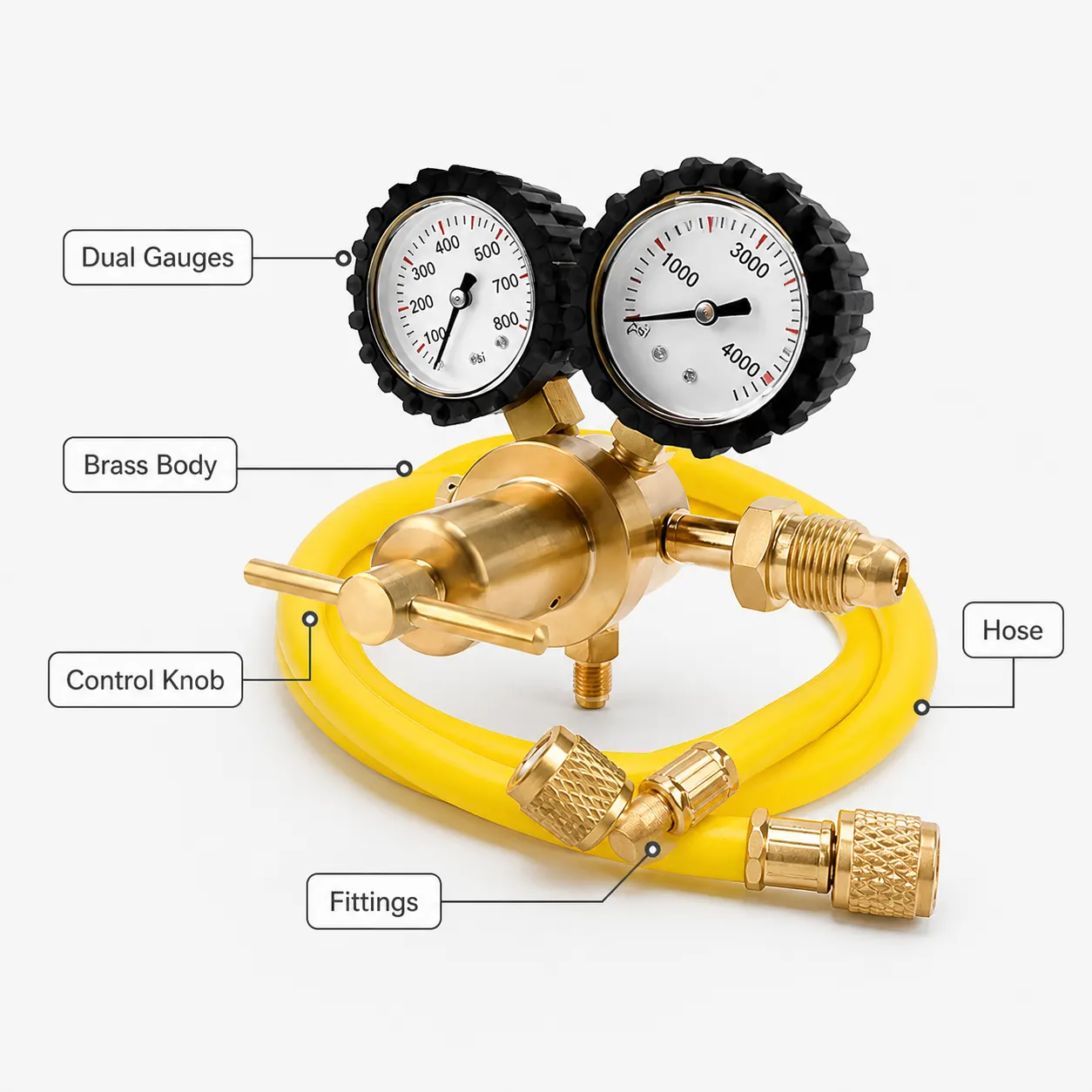
The current page gives a narrow product identity: a nitrogen regulator assembly, locked to the YQD-A configuration, presented for service and maintenance listings. It also calls the item suitable for a focused pressure equipment product page. That is enough to place it on a shortlist, but not enough to approve a connection or working pressure.
Treat the product wording as identification rather than a complete technical datasheet. The manufacturer does not specify the regulator's inlet, outlet, gauge scale, hose length, relief setting or certification on the current page, so those fields remain purchase questions.
| Buying field | Published detail | Confirm before ordering |
|---|---|---|
| Configuration | YQD-A | That the selected listing and replacement parts use the same configuration |
| Product type | Nitrogen regulator assembly | Cylinder connection, outlet connection and intended gas service |
| Hose | Included in the listing title | Length, end fittings, pressure rating and inspection requirements |
| Pressure data | Not specified | Inlet, outlet, adjustment and relief details from the manufacturer |
Match the connections to the job
A regulator can be the wrong purchase even when the general use case sounds right. Write down the cylinder valve, the equipment-side connection, the required hose end and the pressure range specified by the equipment or procedure. The current page does not publish those interfaces, so a photograph or a familiar-looking thread should not be treated as proof.
Pressure work also depends on the system being tested, the isolation method and the competence of the person carrying it out. HSE guidance on pressure systems focuses on the hazard from stored energy and the need to know safe operating limits; the product page cannot replace that site-specific assessment.
- Record the cylinder or supply connection and the equipment-side connection required for the planned job.
- Ask for the regulator inlet, outlet, adjustment range, hose ends and relief information in writing.
- Compare those details with the equipment procedure and the pressure limit of every connected component.
- Check the hose condition, routing, restraint and inspection method before introducing pressure.
- Stop the purchase or work when the connection or safe operating limit remains unknown.
Do not infer performance from the product title
The words HVAC, nitrogen and hose describe the listing context; they do not establish a universal refrigeration, air-conditioning or automotive fit. The manufacturer does not specify a pressure range, gauge accuracy, flow rate, hose length, material, temperature limit or certification on the current product page.
That limitation is useful rather than inconvenient: it tells the buyer where evidence is missing. Compare the exact YQD-A listing with the equipment manual, local procedure and required connection standard, and do not substitute a typical value from another regulator.
Delivery, returns and purchase limits
The product page lists free UK delivery, dispatch in 1–3 business days, typical arrival 2–4 business days after dispatch and 30-day returns. These are commercial details, not evidence that the assembly is suitable for a particular pressure system. Confirm the exact item and missing technical fields before relying on a delivery date for a planned job.
Choose this listing only when the seller confirms the interfaces and operating information needed for the work. If a regulator, hose or cylinder connection cannot be identified confidently, pause and obtain the manufacturer’s documentation or competent technical advice.
Related guides and product details
Consider the Equipmentyqd assembly only after the seller confirms the YQD-A connections, hose details and pressure limits required by your HVAC procedure. Read Nitrogen Pressure Regulator for Refrigeration Leak Testing for related guidance. Read Nitrogen Regulator for Air Conditioning Pressure Tests for related guidance. Review the documented specification on the Nitrogen regulator assembly product page before ordering.
Sources and safety context
- Supports the YQD-A configuration, product identity, service and maintenance positioning, and delivery and returns wording. Current Equipmentyqd nitrogen regulator assembly product page.
- Supports the warning that stored-energy pressure systems require known safe operating limits and appropriate examination arrangements. Pressure Systems Safety Regulations 2000.