
Short answer: A nitrogen pressure regulator for refrigeration leak testing must match the test procedure, cylinder connection and safe pressure limit of the system. The Equipmentyqd product page identifies a nitrogen regulator assembly locked to the YQD-A configuration and describes it for service and maintenance listings. It does not publish the inlet or outlet connection, pressure range, gauge scale, hose length, relief setting or certification. Do not treat a generic refrigeration phrase as evidence that the assembly is ready for every system. Confirm the missing technical fields against the equipment manufacturer’s procedure, then check that the person and workplace handling the test have the required competence and controls.
Separate the product identity from the test specification
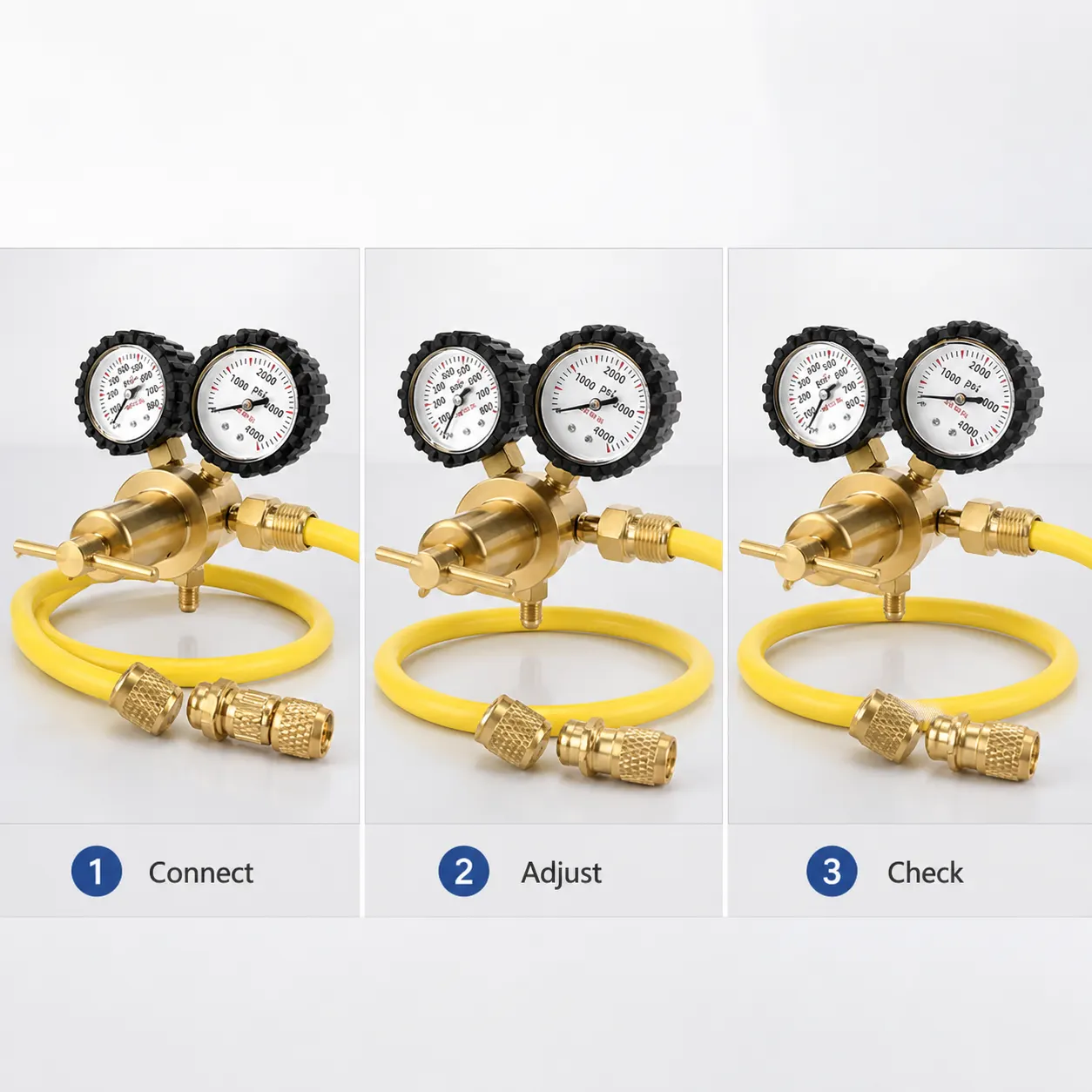
The current page calls the product a nitrogen regulator assembly, locks it to the YQD-A configuration and places it in a service and maintenance context. That supports a cautious shortlist for a refrigeration leak-testing workflow. It does not state that the assembly is approved for every refrigerant circuit, pressure class, cylinder or local procedure.
For a leak test, the decisive facts are the system manufacturer’s permitted test medium, pressure and connection method. The product page leaves the regulator inlet, outlet, gauge scale, hose length and relief setting unspecified, so those values must come from current technical documentation.
| Leak-test question | What the listing says | Evidence still needed |
|---|---|---|
| Gas and assembly | Nitrogen regulator assembly | The exact procedure and gas specification for the system |
| Configuration | YQD-A | Compatibility with the intended cylinder and service equipment |
| Pressure | Not published | Permitted test pressure and regulator adjustment range |
| Connection and hose | Not published | Thread, fitting, length, rating and inspection information |
Build a documented leak-test checklist
Leak testing is a controlled pressure task, not simply a matter of connecting a bottle and watching a gauge. HSE explains that pressure systems involve stored-energy hazards and that owners and users need to know safe operating limits. A product listing can help identify a component, but it cannot authorise a test pressure for a particular refrigeration circuit.
Keep the test decision tied to the equipment manual, workplace procedure and current competence requirements. Where the product page leaves a field blank, write manufacturer does not specify and obtain the answer before the assembly is used.
- Identify the system, its manufacturer’s leak-test procedure and the permitted test medium.
- Record the required test pressure and compare it with the pressure limits of the system, hose and regulator.
- Confirm the cylinder, inlet, outlet and service-port connections before ordering adapters.
- Check isolation, ventilation, exclusion controls and gauge observation arrangements for the workplace.
- Document the result and stop if the equipment or procedure does not define a safe limit.
What the current page leaves open
The manufacturer does not specify a pressure range, gauge accuracy, flow rate, hose length, hose material, relief setting, temperature range or certification on the current page. Those are not minor details when a test depends on controlled pressure and a readable indication.
Do not borrow specifications from a visually similar regulator or from a different YQD configuration. Ask the seller or manufacturer to identify the exact item, compatible connections and applicable operating limits for the intended system.
When this listing is and is not enough
The page is enough to identify a YQD-A nitrogen regulator assembly presented for service and maintenance use. It is not enough to establish that the assembly fits a particular refrigeration circuit or that it meets a documented leak-test requirement.
Buy only when the missing fields have been answered and the result agrees with the system procedure. If the pressure class, fittings or hose rating are still uncertain, select a documented alternative or obtain competent technical advice before connecting the cylinder.
Related guides and product details
Use the Equipmentyqd listing as a starting point only; the refrigeration procedure and confirmed pressure and connection data must decide the purchase. Read Nitrogen Regulator for Air Conditioning Pressure Tests for related guidance. Read HVAC Nitrogen Regulator With Hose: UK Buying Checks for related guidance. Review the documented specification on the Nitrogen regulator assembly product page before ordering.
Sources and safety context
- Supports the YQD-A assembly identity and the limited service and maintenance description. Current Equipmentyqd nitrogen regulator assembly product page.
- Supports the stored-energy and safe-operating-limit boundary for pressure work. Pressure Systems Safety Regulations 2000.